Introduction
Probably no one in the 20th century almost blew it worse than Neville Chamberlin. When he became the Prime Minister of Great Britain in 1937, Hitler was already busy developing new war technology and arming Germany to dominate Europe. He kept a lot of it secret, but all you had to do was read is manifesto, Mein Kampf, to know what Hitler intended. He planned to rule the world.
But after WWI, Chamberlin and other European leaders had no stomach for another war. They convinced themselves that Hitler wasn’t that bad, and they could negotiate with him. Chamberlin even signed the Munich Agreement in 1938, which simply handed Hitler a region of Czechoslovakia without a fight. Somehow, they believed Hitler would say thanks and lie down. He didn’t. Hitler armed Germany while Chamberlin fell behind. By the time he pulled his head out of the sand, it was almost too late.
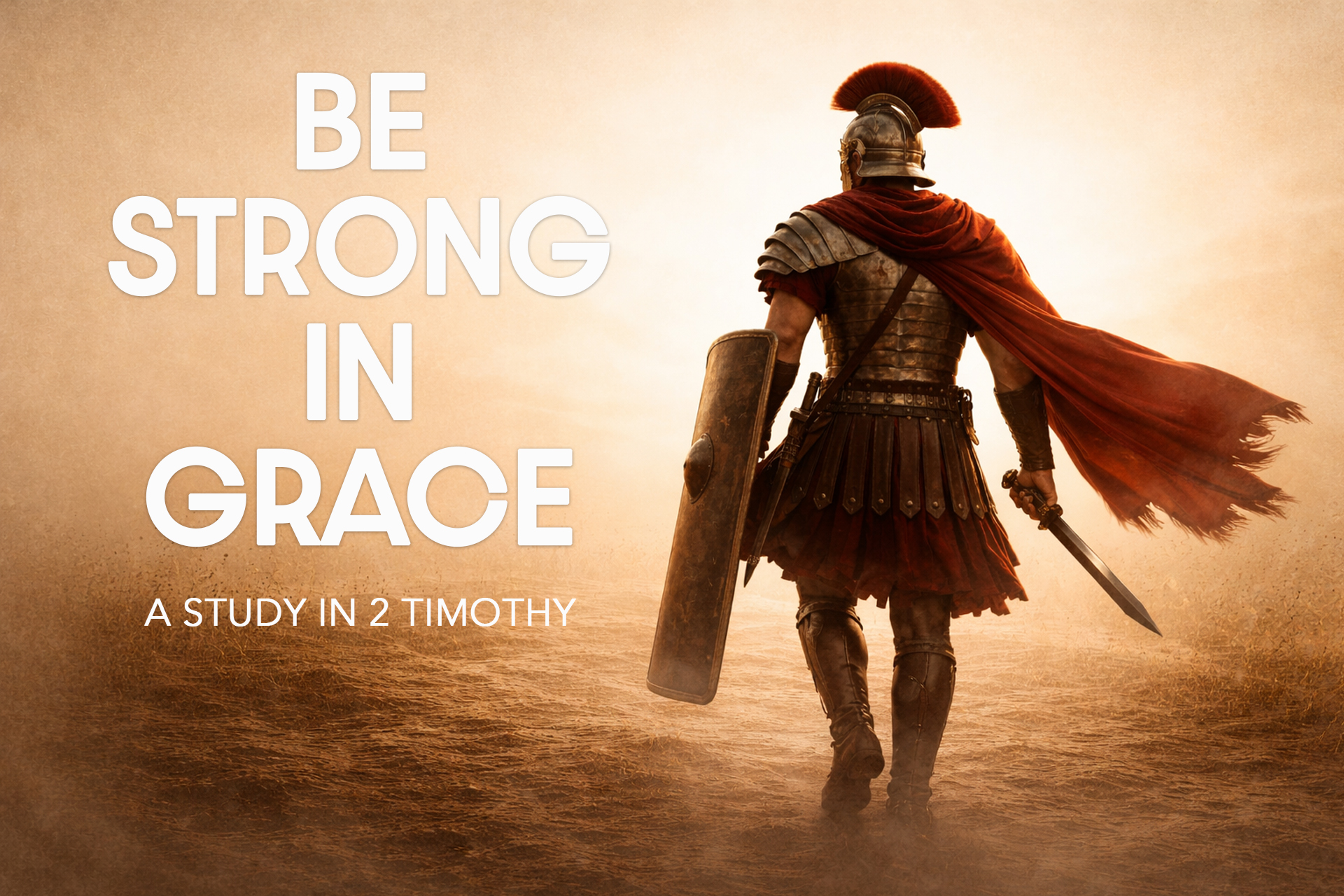
We all wish that we could simply wish away hard things—close your eyes, think happy thoughts, and your problems will disappear. But that’s not reality. Paul understood. He wrote 2 Timothy from the Mamertine Dungeon during Nero’s ruthless persecution of the Roman church. I’m sure Timothy and the Ephesian believers wanted to believe they would eventually wake up from the dream and that’s all it would be. But Paul loved Timothy enough to be honest (2:1, 3–4). A wartime soldier can’t pretend he’s at the beach. He must face the awful reality of war and fight.
But Timothy may think, “Okay, but after this war, it will all be better.” But Paul pours on the bad news in 3:1–9. The war’s not going away! It’s still going today, and it’s only going to deteriorate until Jesus returns. That’s not what you want to hear. There’s no good news in today’s text. But it’s the truth, and love always deals in truth. So, today, we must face the truth. Then you must cultivate genuine godliness that will withstand last days depravity. To get us there, I have 4 challenges from this text. First…
i. Understand the times (v. 1).
Context: Remember that 2:14–26 warned about heresy and false teachers like Hymenaeus and Philetus. He commanded Timothy to flee heresy and all the ungodliness that comes with it. He ended with a little hope—God may grant repentance to some heretics, so don’t give up on them. You never know what God may do. But even if some repent, the war is not going away. Chapter 3 sets Timothy’s struggle in the context of apocalypse. Paul prophecies about what is to come, and he warns that Timothy’s battle was not unique. It was part of God’s plan for “the last days,” the end of the world.
Last Days: I want to immediately put to rest one way people abuse our text. They assume that “the last days” is exclusively the final few years before the Rapture. Then they note all the parallels between the list in vv. 2–4 and modern America, and they boldly conclude, “We’re here. God’s prophecy is being fulfilled right now. Jesus will come very soon.”
It makes for dramatic preaching, but it ignores verses like Hebrews 1:2 which says the last days began with the incarnation, or statements like 1 John 2:18, “Children, it is the last hour; and just as you heard that antichrist is coming, even now many antichrists have appeared; from this we know that it is the last hour.”
The last days began with the incarnation, and they include the entire church age up to the 2nd coming of Jesus. So, don’t use this text to make some dramatic prediction about Jesus’ return or to claim that 21st century America is uniquely awful. Timothy’s world was awful too.
Difficult Times: Rather, God wants you to know that every generation of Christians will face “difficult times.” Christianity always has and always will require a wartime mentality.
And that’s not only because pagans will fit the bill of vv. 2–4. No, Paul’s primary point is that these sins will plague professing Christendom. I say this because of v. 5. Paul’s warning about people with “a form of godliness.” Verses 6–9 also warn about people with influence inside the church. The difficult times will come as much from inside the church as outside.
We want to think that if we build high enough walls, build the perfect church, and surround ourselves with the perfect friends, we can guarantee a safe and rosy Christian experience. We think we can escape the war and live at the beach.
But “Difficult times will come.” Heresy, ungodliness, and they mess they create are like those obnoxious birthday candles that keep igniting no matter how many times you blow them out. They will plague the church until Jesus returns.
Yes, we should strive to keep the church pure and holy, and good practices can shield us from a lot of heartache. But today’s victory doesn’t guarantee tomorrow’s victory. The enemy will return.
On that note, Post Millennialism has been making a comeback recently. It teaches that the entire world will eventually become Christianity. When it does, we will bring in the Kingdom.
That hope stands behind the parallel rise of Christian Nationalism. People like Doug Wilson believe we will eventually make America a truly Christian nation on the way to creating a Christian world on the way to Jesus’ return. It sounds great, but Paul denies it. The world will not get better; it will only get worse. The church will always be a small minority, we will always battle heresy, and it will always be a war. I know that’s not what you want to hear, but it’s the truth. Understand the times. My 2nd challenge is…
ii. Resist the ruse (v. 5).
I want to jump to v. 5 because it provides important framework for the vice list. It’s also shocking and sobering. We expect vv. 2–4 out of pagans, but are people who claim godliness really capable of such darkness? Sadly, they are.
Sinners want a form of godliness. In Timothy’s case, the Ephesian heretics claimed to be teachers of the law. They fancied themselves as Bible scholars. And they covered their wickedness with a thin veneer of asceticism. They boasted about not eating certain foods, and they demanded attention by abusing their bodies. They probably boasted about observing holy days and other external rituals. But it was just a ruse to distract from the ungodliness brimming under the surface.
The same ruse continues today. People all over our country will dress up for church today, say some prayers, sing some songs, and take Communion. And tonight, they will feast on perversion. Or tomorrow they will advocate for killing babies or destroying God’s design for marriage and family.
It’s hard to understand. Why do abusers take their families to church? What about serial cheaters, or mobsters, fraudsters, and people committed to undoing biblical morality? Some of the worst criminals have been faithful churchgoers.
It’s because the heart is deceitful and desperately wicked. Terribly wicked people can convince themselves they are not that bad. A form of godliness soothes their conscience, or it earns the social capital they crave. But God is not impressed, and neither should we. I hope you desire something more.
Godly people desire true gospel power. There is power in the gospel. It has power to forgive all our sin, and it has power to move beyond a veneer of spirituality to genuine heart change. “Now the deeds of the flesh are evident, which are: immorality, impurity, sensuality, idolatry, sorcery, enmities, strife, jealousy, outbursts of anger, disputes, dissensions, factions, envying, drunkenness, carousing…But the fruit of the Spirit is love, joy, peace, patience, kindness, goodness, faithfulness, gentleness, self-control” (Gal 5:19–23a). It’s not hard to go to church, follow a dress code, or keep a diet. But it’s impossible to create the fruit of the Spirit. But the gospel can do the miraculous.
Don’t be content with a form of godliness. Jesus said, “You must be born again.” You need forgiveness and new life that only Jesus can provide. And you can be born again today if you will confess that Jesus is Lord, if you will repent of how you have sinned against him, and if you will believe that Jesus paid for your sin on the cross. Christ will save you, and the Spirit will indwell you. He will give power that changes your life. Receive Christ! It’s the best decision you will ever make.
And Christian don’t be content with a form of godliness. Walk in grace. Then obey 2:23. Be holy and grow spiritual fruit that only grace can explain. And let’s make sure that v. 5 never describes our church culture. We won’t accept mere forms; we will push each other to true godliness.
And resist the ruse of Christian externalism in others. Too many politicians and celebrities have used a form of godliness to gain power and wealth. Just because a man calls himself a pastor or an artist claims to be Christian doesn’t mean they genuinely are one. Don’t give Christian recognition to anyone in whom you don’t see true spiritual fruit and sincere obedience to God’s Word. Resist the ruse. 3rd challenge is…
iii. Embrace the war (vv. 2–4).
Verses 2–4 describe our enemy both out in the world and often within professing Christendom. It’s a disheartening list, but we must study it so that we can see past the ruse and recognize the enemy’s true colors. And vice lists like this are also an opportunity to check your heart for sins you have begun to tolerate. Paul lists 18 vices that I want to organize into 5 categories. First, Paul brackets the list by confronting…
Rebellious Passion: “Men will be lovers of self, lovers of money.” Similarly, v. 4 concludes the list with “lovers of pleasure rather than lovers of God.” The 1st of the 10 Commandments is, “You shall have no other gods before Me” (Ex 20:3). Godliness begins with God having first place in your heart. And rebellion always starts with loving something else in God’s place.
Ironically, the world tells you that one of your biggest problems is that you don’t love yourself enough. Pop psychology has created a culture of navel gazers who obsess over self-worth and self-care. It doesn’t’ work! You were made in God’s image, and you will only find joy when he has first place.
But sinners always want to put themselves first, and they would rather worship the creation than the Creator. They chase money and pleasure thinking they can do better than God. We all defiant rebels at heart.
Paul calls you to see the rebellion for what it is. People may dress up their rebellious love in the best costume, but it is still rebellion. And don’t get sucked into their evil. Love God and live for eternity because you’ll never find joy in this world until God takes his rightful place in your heart. The 2nd category is…
Pride: The next two items in v. 2 are “boastful, arrogant.” Verse 4 also mentions “conceited.” 2 Corinthians 10:17 says, “He who boasts is to boast in the Lord.” But rebellious sinners would rather boast in themselves. It is so common that we often overlook it, but pride is always rebellion against a sovereign God. God alone deserves your worship. See pride for what it is.
And don’t get sucked into the self-congratulation of many politicians, athletes, actors, and even celebrity Christians. They beat their chests, and they love to talk about themselves. Social media and the fashion world call you to stand out and make a statement that glorifies you.
But godly people would always rather talk about God than about themselves. Godliness is always modest. So, look for humility, not a man-centered show. And watch your own heart. Who do you talk about more—God or yourself. Do you want to tell people about what you did or what God did? Stand out with the light of God’s glory against the proud darkness of our world. I’m going to call the 3rd category…
Malice: Verse 2 warns about “revilers.” The Greek term is blasphemos. Here it’s not talking about dishonoring God but about dishonoring your fellow man. It’s talking about slander. No one likes slander in principle, but cable news and many other industries have made a killing off slamming the people you don’t like. People love it, and they think it’s normal to rip your enemy to shreds with your words. We’ve normalized nasty hearts, and we praise nasty words that accomplish nothing of value.
Verse 3 adds, “malicious gossips.” This Greek word is diábolos, or the word for devil. When it’s used in this type of context it describes people who make malicious accusations. There’s a time to speak the hard truth in love, but so much of what people say comes from bitterness and rage.
Most people in the church are smart enough to be coy about their malice, but be very careful about the professing Christian with a biting edge. It doesn’t take much at all to break open the dam of gossip and criticism. He may know how to put on an impressive form of godliness but malice is contrary to grace. Of course drive it out of your own heart or bitterness will ruin you.
Later, v. 3 warns about “brutality.” It means untamed. And v. 4 lists “treacherous.” Both point again to uncontrolled malice. It’s amazing how rude, nasty, and fickle people can be. See it for how awful it is and don’t get sucked in. My 4th category is…
Disorderliness: One of the more surprising items in this list is “disobedient to parents.” We don’t think anything of it, but the Bible teaches that family structure is foundational to a healthy society. Few issues spell more doom than bad parents who don’t demand obedience and children who disobey.
Disorderliness continues in v. 3 with “unloving” and “irreconcilable.” “Unloving” probably especially concerns places where there should be natural love, like between parents and children. But many families are plagued by strife. They are “irreconcilable.” Why? Because their hearts are not mark by the fruit of the Spirit but by pride, anger, and cynicism. Make sure those sins do not take root in you.
I also included “without self-control” and “reckless” under disorderliness. Self-control is a fruit of the Spirit. Fools run their mouths and follow their passions. And reckless can be exciting for a time. But grace takes control of it all. Parents, one of the best gifts you can give is structure and discipline that produces self-control. Or maybe it seems impossible to control your thoughts, fears, words, or work habits. There is power in the grace of God to live an orderly life. Walk in that power. My final category is…
Godlessness: Another surprising item in this list is “ungrateful.” We don’t typically think of that as a big deal. But ingratitude to God and to people reflects godless arrogance and entitlement. Be leery of the person who is always complaining and always demands more because grace makes us humble, and it drives us to see God’s good gifts and to rejoice.
The next item is “unholy.” Paul uses an unusual term that indicates a lack of reverence toward God and even other people. Our culture doesn’t just enjoy destroying sacred cows; it relishes destroying what is truly sacred. We think that if nothing is special, everyone is special. It’s absurd.
Along these lines, v. 3 warns about “haters of good.” Sinners love gossip, violence, complaining, and bitterness. Grace teaches you to love virtue, humility, and truth.
In sum, people are constantly complaining about how terrible the world is. Difficult times are everywhere. Politicians claim the problem is bad policy. Educators claim the problem is ignorance. Sociologists claim the problem is structural. But we know the problem is sin, and it’s not going away until Jesus returns.
But don’t be discouraged. God said it would be hard, but he promised grace to overcome. See the sin for what it is and embrace the war God has called us to fight knowing that grace will see you through. The 4th challenge is…
iv. Separate from sin (v. 5b).
Our text ends with clear direction about how we must respond to such sinful men—“Avoid such men as these.” Paul is specifically talking about false believers. “I wrote you in my letter not to associate with immoral people; I did not at all mean with the immoral people of this world, or with the covetous and swindlers, or with idolaters, for then you would have to go out of the world. But actually, I wrote to you not to associate with any so-called brother if he is an immoral person, or covetous, or an idolater, or a reviler, or a drunkard, or a swindler—not even to eat with such a one” (1 Cor 5:9–11).
Sin is everywhere, and there’s no way you can wall yourself off from all these sins and shield yourself from difficult times. But we must separate from professing Christians who use the name of Christ as a cover for their hypocrisy.
We must see sin for what it is. It’s a threat to you and those we love. Last week we saw that we always want to keep the door open for influence because God can give repentance. Be optimistic about God’s power, but be pessimistic about your flesh. Be very careful about making friends with a hypocrite who is consumed with hidden sin.
Conclusion
“In the last days difficult times will come.” God is lovingly telling you the honest truth about what our lives will be. Take heed. But don’t be discouraged. The gospel is powerful. When you walk in grace, you can stand. So, identify the sins you need to replace in your life, and
cultivate genuine godliness that will withstand last days depravity. You can change, and you can stand.
other sermons in this series
Sep 20
2026
How to Finish Well
Pastor: Kit Johnson Passage: 2 Timothy 4:6–8 Series: 2 Timothy
Sep 13
2026
Fulfill Your Ministry
Pastor: Kit Johnson Passage: 2 Timothy 4:3–5 Series: 2 Timothy
Sep 6
2026
Biblical Preaching
Pastor: Kit Johnson Passage: 2 Timothy 4:1–2 Series: 2 Timothy