Introduction
God loves to glorify himself by surprising us. He chose Jacob instead of Esau, he gave Rahab the harlot a big role in the conquest of Canaan, he put Ruth the Moabitess is in the line of Christ, and he chose David the shepherd and the youngest son to be king. All of them are great stories. But more importantly, they tell us about our God. He loves the weak, the poor, and the sinner. He loves to surprise us by showing grace to the very least.
With that in mind, we are returning once again to John 20. John really wants to persuade you to believe that Jesus truly rose from the dead. He builds his case with 3 eyewitness accounts. First, Peter and John saw the empty tomb and the discarded graveclothes. Second, Mary Magdalene talks with Jesus. Third, Jesus visits the disciples in a closed room.
Today, we will cover the 2nd story—Jesus’ appearance to Mary. It’s a big deal because this is Jesus’ very first appearance after the resurrection. Can you imagine being the first to see the resurrected Christ? That would be an incredible honor. Who did Jesus choose for that first appearance? It’s got to be Peter or John, right? Or maybe someone important like Pilate. Or maybe a Jewish high roller like Nicodemus, Joseph of Arimathea, or Annas.
No, Jesus chose Mary Magdalene. She’s not significant. She’s not even one of the 11. She’s a woman in culture where they didn’t count as eyewitnesses. It’s a shocking choice, but Jesus isn’t interested in human glory. He loves people. He loves the weak and the despised. And he proves that not just by his choice of Mary but also by showing her beautiful patience and compassion (read). This is a great story. At the end Mary is overjoyed, and she gets to tell the disciples, “I have seen the Lord!” But it doesn’t start that way. The story begins with…
I. Grief and Confusion (vv. 11–13)
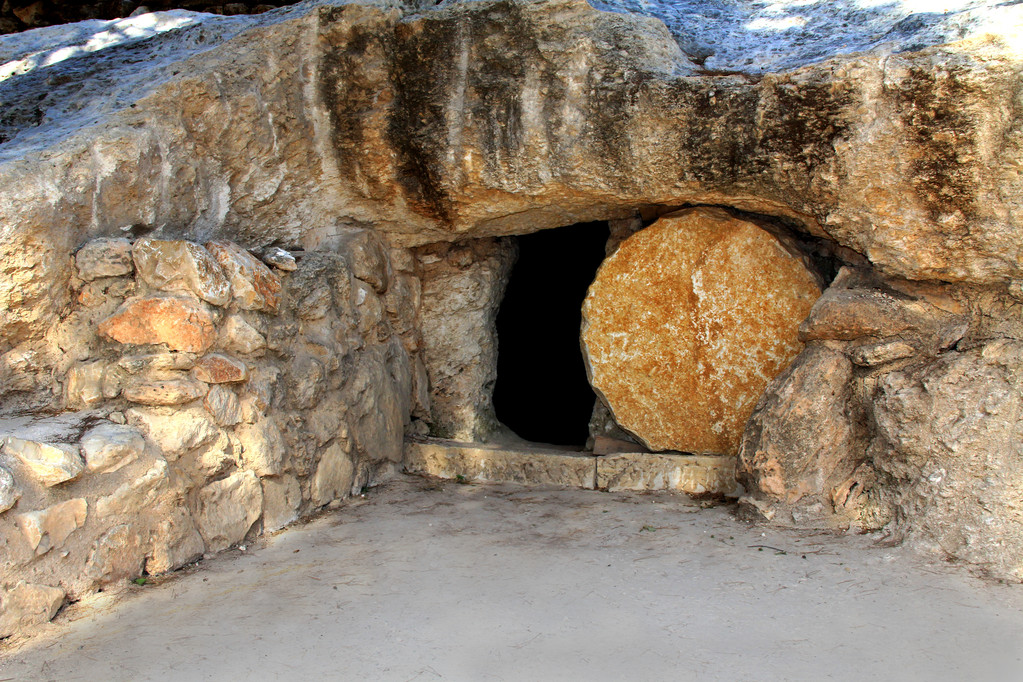
Remember that John 20 begins with a grieving Mary (vv. 1–2). Mary got up early Sunday morning to tend Jesus’ dead body. But when she saw the stone was gone, she didn’t stick around to investigate. The other ladies stayed, and they got to hear the angels announce that Christ had risen.
But Mary immediately fled to Peter and John, certain that someone had taken Jesus’ body. Either Joseph moved the body, or even worse, grave robbers had stolen him. Either way, she was horrified. In Mary’s world, desecrating a dead body was awful. Jesus deserved better.
Peter and John were horrified too, and they took off to do their own investigation. Apparently, Mary followed them back to the tomb though at a slower pace. They saw the empty tomb, the grave clothes, and the folded facecloth. Peter and John believed Jesus was alive, and they left rejoicing.
Now Mary is alone at the tomb. All is quiet except for Mary’s weeping. And she wasn’t quietly shedding a few tears. No, John uses a term that describes loud wailing. He uses the same term in chapter 11 for the professional mourners who came to Lazarus’s tomb. She was wailing outside the tomb.
And Mary’s grief is vital to the story. Verse 11 mentions it twice. In v. 13, the angel asks, “Woman, why are you weeping?” Then Jesus asks the same question in v. 15, “Woman, why are you weeping?” Mary felt overwhelming sorrow. God cared about Mary’s grief, and he cares about yours.
Sometimes, we are ashamed and embarrassed by our sorrow, but this story is her to say that you don’t need to be ashamed. Jesus is a man of sorrows. He will seek out Mary in her sorrow, and he will seek you out also.
Returning to the story, in her despair Mary finally decided to peer into the tomb. When she did, she saw “two angels in white…” These are almost certainly the same angels the other women had seen earlier in the morning, the same ones who proclaimed, “Why do you seek the living One among the dead? He is not here, but He has risen” (Luke 24:5b–6a).
But Mary fled, and she missed that announcement. Now the angels are sitting quietly in the tomb. Angels almost always indicate the presence and glory of God. Here, they function as clear evidence that God had come to the tomb, and God had done something miraculous. Mary should have recognized that grave robbers didn’t take Jesus; God raised him from the dead.
But she didn’t. So one of the angels said to her, “Woman, why are you weeping?” I believe the angel said that with a mix of compassion and rebuke. “Mary, don’t you remember that Jesus said he would rise? Don’t you see the empty tomb? Don’t you see us?”
What would you do if you were Mary, and you saw a couple angels in an empty tomb? What would you say if one of them asked why you are crying? I’d be stunned! I’d like to believe I would believe in the resurrection. So, you’d expect Mary to immediately say, “I believe!”
But no, she acts like talking to angels is normal. She replied, “Because they have taken...” The resurrection was still not on her radar. She’s still talking about grave robbers. She was so convinced someone had moved Jesus’ body, so overwhelmed with grief that she couldn’t see the obvious.
We sinners can be so spiritually blind and irrational. Mary didn’t see the truth, and very often you and I are just as blind. The Bible is so clear about who God is and how he has promised to be faithful, but then a trial comes, and you feel overwhelmed. You have such a hard time seeing, believing, and staying anchored. So, don’t despise Mary; she is all of with our weak faith blurry vision.
Well, the angel doesn’t get a chance to reply. Instead, Mary got a feeling that a man was standing behind her. Mary turned around, and she saw the resurrected Jesus. Notice there’s another star next to “saw.” It’s another historical present verb, and John is once again wanting you to feel the power of the moment. Jesus is standing right in front of her. Mary becomes the very first person to see Jesus alive. Wow!
However, she “did not know it was Jesus.” John doesn’t tell us exactly why. Some people have speculated that she didn’t fully look at him, or the sun was in her eyes, or her tears affected her vision.
But none of these explanations are adequate, especially because Mary is not the only one who struggled to recognize the resurrected Jesus. Later that day the two disciples on the Road to Emmaus will have a long conversation with Jesus, but they don’t recognize him until God suddenly removed the blinders at dinner. Luke also says that when Jesus appeared the disciples that evening it took them a minute to believe it was Jesus. And again, when Jesus appeared to the disciples in John 21 by the Sea of Galilee, they still didn’t recognize him immediately.
So, in a couple of these stories it seems that God prevented people from recognizing Jesus. That’s especially so on the road to Emmaus and in our text because of the sudden turn from blindness to sight.
But it’s also true that Jesus’ resurrection, glorified body was different from his pre-resurrection body. Paul talks about the difference between our fallen bodies and our future glorified bodies in 1 Corinthians 15:35–45. I especially appreciate the seed and the plant illustration. The seed and the plant are vitally connected, but they are not the same. Your glorified body will be far better than what you enjoy today.
If that’s how it is for us, we can assume it was the same for Jesus. He rose from the dead glorified. He still had the nail prints, and his resurrected body was vitally connected to his previous body, but it was different. It was so different that people didn’t always immediately recognize him. I’d love to understand all that better, and so would you, but we’ll have to wait until we get our glorified bodies.
Regardless, Mary did not recognize Jesus. Think about the irony. She is the first person to lay on eyes on the resurrected Jesus, but she doesn’t recognize him. She is weeping so intensely over his death that she can’t see he is standing right in front of her.
But Jesus isn’t disgusted or impatient. He chose Mary to see him first even though Peter and John were just there. Frankly, he could have chosen anyone, but he chose Mary—a woman who once was possessed by 7 demons. He loved her, and he loved how she had been transformed. He’s not disgusted by her blindness; he has compassion.
But the fact that God is patient with our weak faith and poor sight does not mean he’s content to leave us there, and neither should you. When you are struggling to see God’s truth and believe it, it’s a problem that you must address.
So, (v. 15) Jesus said to her…” I want you to hear Jesus’ compassion. Again, he loved Mary, and he sympathized with her grief. Psalm 103:13–14 say, “As a father has compassion on his children, so the Lord has compassion on those who fear Him. For He Himself knows our frame; He is mindful that we are but dust.” Jesus was not disgusted by Mary’s blindness; he was moved toward her. And Jesus has the same response to you. He moved toward your weakness, not away from it.
But again, patience is not the same as resignation. Mary’s blindness must become sight. She must believe, and Jesus’ questions are also a mild rebuke. “Come on Mary. Don’t you remember what I said? Don’t you believe that God is sovereign over death? Have faith in God.” By God’s grace, you never have to resign your fears and doubts. You can see the promises of God and believe.
But Mary wasn’t there yet (v. 15b). If you are still thinking about your glorified body, this verse implies that it’s going to look like a normal human body. Afterall, Mary didn’t think Jesus was an angel; she assumed he was a common gardener. You’re going to look like a human for all eternity; you’ll just be one without any effects of the curse.
That said, Mary thinks Jesus is the gardener, and she starts accusing him of aiding in desecrating Jesus’ body. She’s not backing down! Of course, it’s coming from a good place. Mary offers to pay for an alternate burial. That’s not a cheap step. But remember that Luke 8 indicates that Mary was relatively wealthy. She’s ready to use it to properly bury Jesus.
And of course, she’s still convinced Jesus is dead. The empty tomb and the 2 angels did not dissuade her. Not even the glorified Christ was enough to give her pause. Mary did not invent the resurrection. People in John’s day and in our day want to dismiss the resurrection as a fable or as an elaborate ruse put on by Jesus’ closest friends. No, Mary was one of the closest, and not even two angels in an empty tomb made her think resurrection. The resurrection is not a ruse; it is reality. God raised Jesus from the dead!
And in v. 16, Jesus proves it to Mary. By the sovereign grace of God, our story suddenly shifts from grief and confusion to…
II. Joy and Clarity (vv. 16–17)
This is one of the most precious and consequential moments in all of Scripture. Mary is wailing over Jesus. She pleads with the man that she thinks is the gardener to please point her to where she can find Jesus’ body and take care of it. Then she turns away from Jesus face due to her overwhelming sorrow and frustration.
But with one word Jesus changed everything (v. 16). John 10:3–4 say, “The sheep hear his voice, and he calls his own sheep by name and leads them out. When he puts forth all his own, he goes ahead of them, and the sheep follow him because they know his voice.” Jesus called Mary by her name, and she knew his voice.
Why exactly is not abundantly clear. Was there something about Jesus’ voice or something about how he said Mary’s name that seized her attention? Was it that Jesus knew her name? Or did God supernaturally remove the blinders from her eyes? It was probably a combination of these.
Regardless, when Mary heard her name grief and confusion suddenly became joy and clarity. “That’s Jesus!” She turned around and looked him in eye. She had seen his face dimly but now the blinders are off. For the very first time, eyes of faith beheld the risen Savior. “Jesus is alive!” Mary believed.
She blurted out “‘Rabboni’ (which means, Teacher).” This title doesn’t have any sort of great theological significance. It just means “teacher.” Rather, John is giving another vivid detail from an eyewitness. When you are making up a story, you skip over details because you don’t want to mix them up. But when you are describing a significant moment, the details stand out, and you want to share. John probably heard Mary tell this story later the same day, and I bet he heard her tell it many times afterwards. She really did see Jesus. He really is alive.
Mary is overjoyed. I imagine Jesus was too. He was so happy that the work was done and he was alive. And Jesus was so happy to see Mary’s grief turned to joy. Can you imagine? Have you ever had someone ask you what Bible moment would you most like to experience? I’ve heard that question many times, but I’ve never answered or heard anyone else answer with this moment. But it doesn’t get any better than to have the first one-on-one moment with Jesus on resurrection Sunday. Wow!
Jesus cares. Moments like this are a big deal. There have been a few times in my life where I got to sit down one on one or with only a handful of people with a pastor or a leader whom I deeply respected, and I received personal care. You relish those moments. Mary had one of those.
And Jesus cares for you. He knows every detail about you just like he knew Mary. He loves you like he loves Mary. And when you come to Jesus with your burdens, he is just as engaged with you as he was with Mary. We have a wonderful Savior. He’s the sovereign Lord, but he’s also like a big brother. It’s awesome!
Returning the story. Mary is overjoyed. And what to women do when they are really excited to see you? They grab on! Mary must have given Jesus a grandma hug, because, “Jesus said to her, ‘Stop clinging to me.’’ I’ll just leave it to your imagination as to why he had to say that. Mary is excited!
Teenagers, maybe you get antsy about a grandma hug because it’s too much, or it’s a little embarrassing, but that’s not Jesus’ concern. Rather, notice his explanation (v. 17). That probably strikes you as confusing. What does Jesus mean?
First, when he says, “Stop clinging to Me, for I have not yet ascended to the Father,” his point is that he really has come back from the dead, and he really is present. He’s not rebuking her for the act of touching him because in v. 27 he invites Thomas to touch his scars. Rather, Mary was clinging to Jesus because she was afraid that she would lose Jesus again. So, Jesus is saying, “I’m here, and I’m not leaving. You don’t have to hold onto me.
However, he also wants Mary to know that life wasn’t going to just pick up where it left off before the Passion. He instructed her, “Go to my brethren…” In other words, Mary and the disciples must understand that Jesus was in a time of transition. He has accomplished redemption and secured his seat at the Father’s right hand. Jesus will make several post-resurrection appearances to prove that the resurrection happened, but otherwise, his work on earth is done. The disciples will see Christ, but they won’t permanently be with Christ the same way they were before the cross.
Mary, the disciples, and us all may find that disappointing. We’d love to have Jesus’ physical presence but remember that we’re better off with the Holy Spirit than with the physical presence of Jesus. It is to our advantage that Jesus left and the Spirit came.
Jesus emphasizes this by saying, “I ascend to my Father and your Father, and my God and your God.” The resurrection and the gift of the Spirit have provided you with a new and profound relationship to God.
So, Jesus wants Mary to know, and he wants her to tell the disciples that Jesus really is alive. They will see Jesus, but they won’t dwell with Jesus the same way they had. He’s setting the right expectations. But he doesn’t dampen Mary’s joy in the least. Jesus is alive, and she is overjoyed. And v. 18 says that Mary turned her joy into…
III. Proclamation (v. 18)
Remember that the other women had already left the tomb and told the disciples what they saw and heard. But Luke says “These words appeared to them as nonsense, and they would not believe them” (24:11). Now Mary returns with another report. She didn’t just see an empty tomb; she saw Jesus. I love how the text puts it, “I have seen the Lord!”
She also reported what Jesus said about going to the Father. They should expect to see Jesus, but they shouldn’t expect his permanent presence like they enjoyed before the Passion. They probably mocked her too. “Woman, you’re crazy. Jesus cannot possibly be alive.” But they will see for themselves later that night.
Conclusion
In conclusion, what a great story! How should you respond? First, believe in the resurrection. Today’s passage tells of a powerful journey from despair, doubt, and blindness to sight, faith, and joy. Where do you fall on that journey? Are you Mary at the beginning of the story, the middle, or the end? If you doubt the resurrection, please hear Jesus’ voice. Maybe he is calling your name and saying, “I am alive.” He is. Our text is a credible eyewitness account. Jesus rose again. He is Lord and Savior. So, respond with Mary’s faith. You can be saved today. God can be your God and your Father. If you have questions, we want to talk afterwards and help you know that Jesus is your Savior. Please believe in the resurrected Christ.
Second, rest in Jesus’ love. Christian, Jesus has the same personal, fatherly love for you that he had for Mary. He knows all your cares, and he is patient with all your weakness. Take all of it to him. He will patiently care for you just as he did Mary.
Third, tell everyone. Mary “came announcing…‘I have seen the Lord.’” She sounded crazy, but she didn’t care because she knew it was true. Christian, so do you. Who cares if people think you are crazy. Some will mock, but the sheep will respond. Tell the world, “I have seen the Lord.”
other sermons in this series
Dec 14
2025
Friendship for a Lifetime
Pastor: Kit Johnson Passage: John 17:17 Series: John, After the Farewell Discourse
Nov 16
2025
Believe in the Resurrection
Pastor: Kit Johnson Passage: John 20:1–10 Series: John, After the Farewell Discourse
Nov 9
2025
Christ Died and Was Buried
Pastor: Kit Johnson Passage: John 19:31–42 Series: John, After the Farewell Discourse